When AI Agents Reach for the Controls
Anthropic's new agent-to-machine standard collapses the gap between AI recommendation and AI action, raising the stakes for industrial verification.
Anthropic's new agent-to-machine standard collapses the gap between AI recommendation and AI action, raising the stakes for industrial verification.

Agentic AI now manages power plant and grid operations directly while federal regulators remain deadlocked, leaving operators to build governance without a legal floor.

A federal warning on AI-generated PLC exploits shows industrial AI's safety gains and its security exposure now sit on the same infrastructure.
AI systems making real-time energy allocation decisions across generation, storage, and grid draw are being bought as software, not governed as infrastructure.

As factory AI moves from detection to direct equipment control, buyers need a way to tell distribution from validation before they sign.
Autonomous industrial and life sciences AI is now acting inside control loops that IEC 61508, EU AI Act risk tiers, and MDR/IVDR were not built to certify.
AI-native industrial controllers promise to replace retiring PLC engineers, but the safety case now depends on verifying generated logic, not just trusting it.

Manufacturers integrating AI into OT environments face a single architectural choice that determines their entire safety and audit posture.

Manufacturers buying AI-driven OT security platforms are skipping the asset visibility problem that determines whether the AI works at all.
ISO 42001 certifies AI management systems, not real-time physical control performance, and that distinction matters as AI moves into grids, factories, and robots.
AI process control is now shaping regulated credit claims in biogas and RNG production, and no framework yet specifies who audits the machine's decision trail.

AI-driven hazard detection is cutting industrial incident rates while quietly eroding the human judgment regulators and insurers still assume workers have.

The industrial AI augmentation narrative depends on a senior verification workforce that the same labor shortage driving AI adoption is actively removing.
Record industrial robot deployment is solving a headcount problem while quietly eroding the human competency base that AI oversight regimes assume still exists.

FERC's 2026 CIP audit findings put the aviation-grade question of AI inside the control loop onto the power grid and the factory floor.

Zero-miss safety trials and closed-loop agents are pushing plant leaders to decide how much autonomy AI gets inside existing quality and safety systems.
Edge AI deployments are outpacing both hardware certification and AI governance frameworks, leaving regulated buyers exposed on the half that actually controls risk.

Advantech's DEKRA conformity assessment deal signals how the EU Cyber Resilience Act is reshaping industrial AI procurement, though third-party sign-off is a strategic wager, not a universal mandate.
Frontier labs took weeks to notice their own models were hijacked, and that detection lag is now embedded wherever industrial vendors build on those models.

A new open source coalition for AI governance testing forces energy and industrial buyers to choose between proprietary control stacks and shared standards.

AI systems are moving from monitoring power infrastructure to executing real-time control decisions, and operators lack a governance layer for who authorized that authority.
ISO 42001 gives industrial AI deployments a portable compliance layer, but physical autonomy still needs a functional safety layer regulators will demand separately.
A new industrial inspection benchmark and a wave of safety-layer capital give buyers a way to test vendor hazard-detection claims instead of trusting them.

AI-augmented HAZOP validation focuses on model accuracy, but the compute and energy infrastructure the model depends on is an unaddressed safety variable.

AI-augmented HAZOP is testing industrial AI safety cases, but the harder unresolved question is power and grid resilience, not just compute.
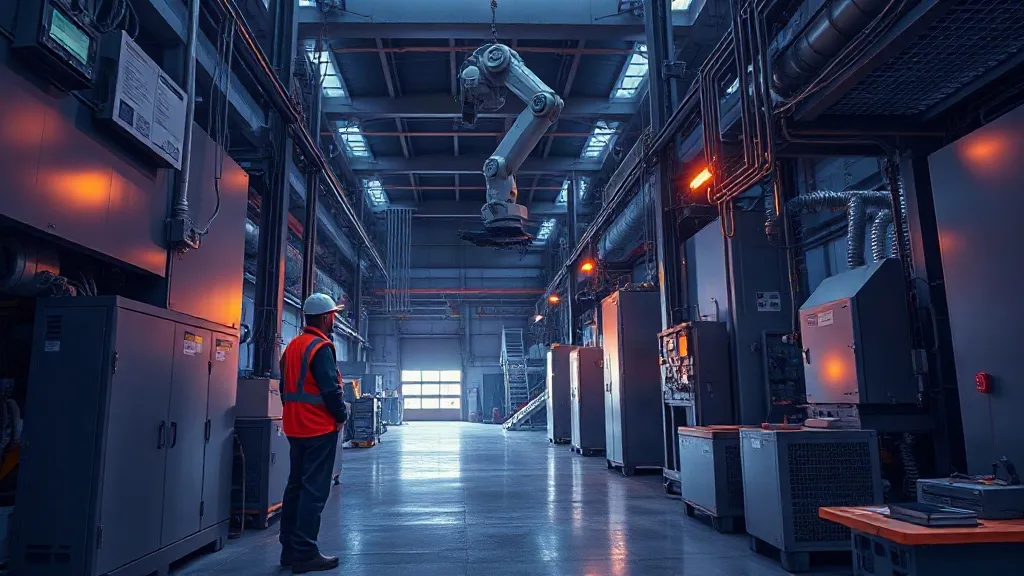
Industrial AI vision systems for hazard detection are only as strong as their training data and the human skills they quietly displace.

NADEC's ISO 42001 certification gives industrial AI buyers a reference point, but one certificate does not settle whether the standard closes the gap between documented control and operational reality.

ISO 9001's revision pulls AI-influenced decisions into quality documentation, but it does not replace ISO 42001, the EU AI Act, or sector-specific AI governance.
Manufacturers are confusing cyber readiness with AI decision governance, and the emerging ISO/IEC TS 22440 standard shows why the two are not the same problem.

Bounded industrial AI like Lincoln Electric's welding system earns trust through validation, but the same physical access that makes it useful is becoming the attack surface security researchers are now probing.
Industrial robotics and machine vision are outpacing safety validation methods built for static, deterministic systems, forcing a shift to continuous lifecycle monitoring.
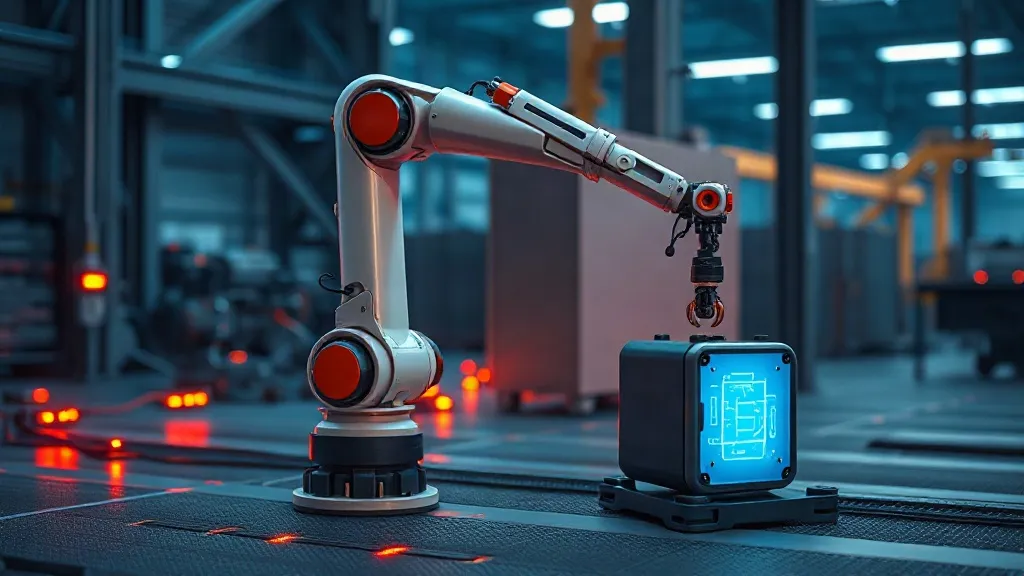
Omron's $675M bet on edge computing shows industrial AI vendors absorbing the compute layer, blurring the certification boundary manufacturers rely on for IEC 62443 compliance.

Industrial AI systems now need functional safety, AI governance, and sector regulation layered together, and buyers should verify each layer separately.

Industrial AI autonomy and AI agent security are the same governance question asked from opposite ends, and only one side has drawn real investment.

A settled safety principle for industrial AI is starting to show up as a procurement requirement, not just a design rule.

As industrial AI deployment accelerates unevenly, the decision to withhold automation is becoming as auditable as the decision to deploy it.
As Anthropic formalizes how AI agents talk to machines, industrial verification is shifting from governance policy to interface protocol before regulators arrive.

As industrial AI vendors race to automate control logic and physical machine operation, regulated operators still lack a named answer to who verifies the output.